
Leadership insight · Video
Africa's Potential Is Undeniable. Responsible Stewardship Is Essential.
Africa's vast natural wealth and human potential present extraordinary opportunities for development. However, translating these opportunities into sustainable progress requires visionary leadership, responsible stewardship and a strong commitment to ethical governance.
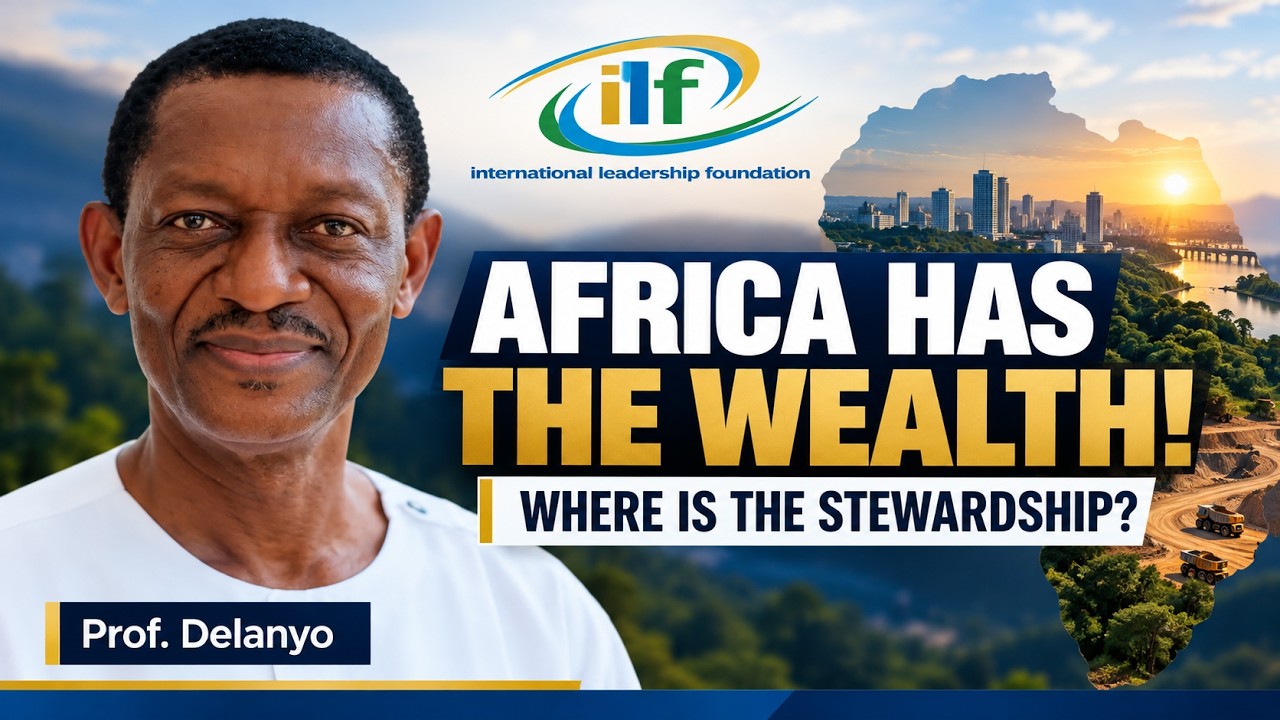
In this leadership insight featuring Prof. Delanyo Adadevoh, Founder of the International Leadership Foundation, ILF Ghana highlights the urgent need to rethink stewardship across Africa and challenges leaders to embrace their responsibility in shaping a more prosperous and hopeful future.
Key points from the message
Prof. Adadevoh opens with the scale of Africa's potential. He notes that the continent holds about a third of the world's natural wealth. By 2050, he says, one in five people on the planet, and a third of the global workforce, will be African, rising to one in three people by 2100. This is why people say "the future is African". He asks the harder question that follows: what will that future look like? For him, stewardship concerns not only Africans today but humanity tomorrow.
He grounds stewardship in God's purpose for humanity. People were created to bear God's image, to live in relationship with God and with one another, and to exercise dominion, or stewardship, over creation. That means managing creation so that everything serves the purpose God intended.
He then sets out three steps to effective stewardship:
- Awareness. Africans need a positive self-identity: there are no inferior or superior peoples, and most people use only a small part of their potential. They also need to know the true value of their resources. When you do not know the value of what you have, others who do will take it and give you something of lesser value in return.
- Aspiration. What people aspire to shapes what they attempt. When aspirations stop at survival rather than thriving, a people remains dependent on handouts. Africa needs far higher aspirations to see a different tomorrow.
- Ownership. Much of Africa's natural wealth is owned by foreign governments and multinational companies. He estimates that Africans may receive less than 15 per cent of the wealth these resources generate. He recalls how Gandhi's campaign over the ownership of salt began India's road to independence. He argues that a better future will not come until Africans take ownership of their resources, and that economic independence will take at least ten times the effort that political independence did.
Continue the series: Part II: Adding Value to Africa's Resources
Be part of the movement
Explore ILF Ghana's leadership development programmes and become part of the movement to transform leadership across Africa.