
Leadership insight · Video · Part II
Africa's Greatest Challenge, Part II: Adding Value to Africa's Resources
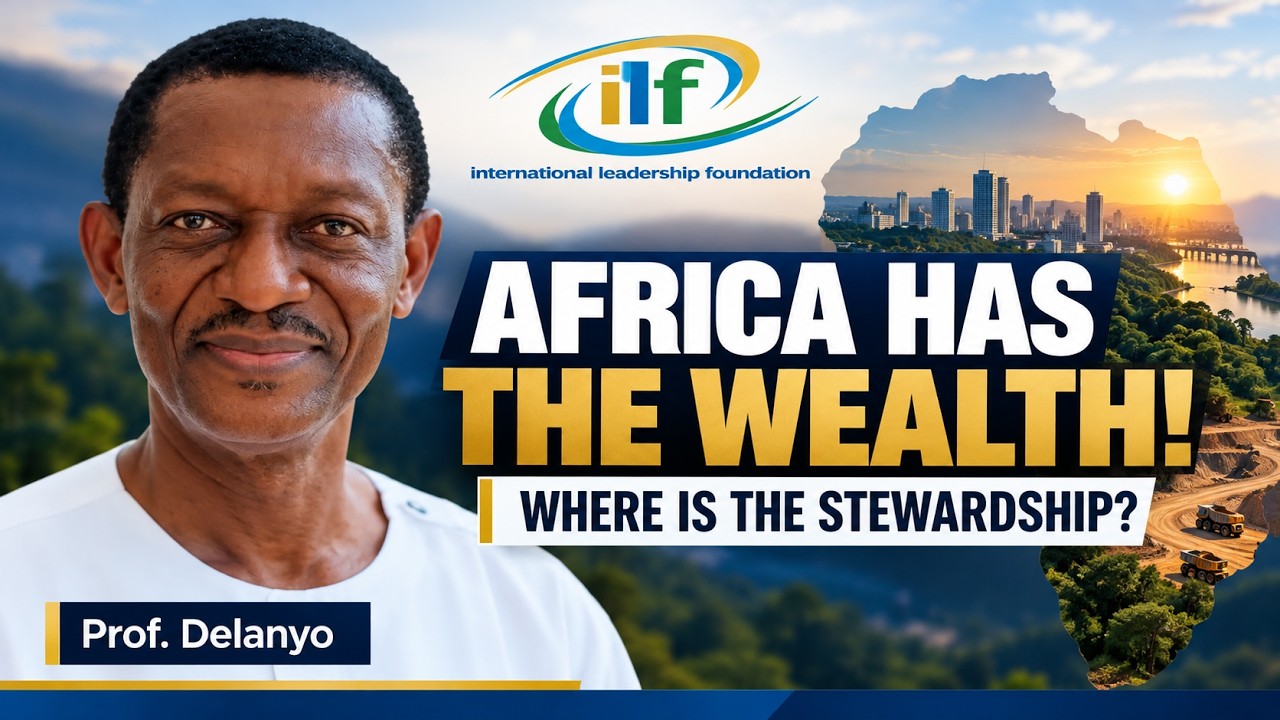
In the second part of his leadership insight on stewardship, Prof. Delanyo Adadevoh, Founder of the International Leadership Foundation, completes his steps to effective stewardship. He moves from ownership to the harder work of adding value to Africa's resources and sharing the benefits fairly.
New to the series? Start with Part I, which covers awareness, aspiration and ownership.
Key points from the message
Ownership, continued. Prof. Adadevoh asks whether Africa has the satellite technology to see its own resources, or must rely on other nations to know what it has. Many of the continent's plants and animals carry Greek and Latin names given by others. Recalling that Adam was asked to name what God had given him, he argues that the right to name is part of the right of ownership. He also observes that many Africans carry non-African names because they were taught these were more legitimate in religious terms. He is clear that he is fully committed to his faith, but believes faith can be pursued seriously while keeping African identities.
He then sets out the remaining steps to effective stewardship:
- Technology. Having natural resources is God's work, not an achievement. Being the largest producer of gold without adding value, he says, means "stealing the future of the next generation faster than other nations". He imagines tertiary education focused on the technologies needed to add value to each country's resources: diamonds in Botswana, gold in Ghana, and lithium, cobalt, oil and gas elsewhere. Ghana, he argues, should aim to have Africa's largest gold refinery as well as being its largest gold producer. Those who hold these technologies will not simply share them, so Africa must develop them itself. Education, in his view, should help people understand their environment and add value to what is around them, to improve life for the ordinary citizen.
- Adding value. Deploy those technologies, so that Africa trades in value-added goods rather than selling raw materials.
- Fair distribution. Ensure the benefits reach ordinary citizens in every nation of the continent. Then, he says, Africa will take its seat at the global table as an equal, bringing unique advantages for the good of humanity.
Africa is the future, he concludes, but whether it is a good future depends on effective stewardship. He invites everyone to join in improving stewardship on the continent for a better tomorrow.
Be part of the movement
Explore ILF Ghana's leadership development programmes and become part of the movement to transform leadership across Africa.